Autonomous AI Is Already Among Us
It’s not science fiction anymore: AI models that make independent decisions and act online are real, deployed – and barely supervised. Trading bots set markets aflame, AutoGPT variants spin up agents capable of launching actions across the open web, and military initiatives pursue unrestrained autonomy. The race to AI capability is accelerating, but the safety infrastructure? Still in the starting blocks.
This article is not here to entertain or terrify. It aims to warn, to ground the conversation in facts, and to kick serious ethical debate into overdrive – before events overtake us all.
We’re Already Behind – and AI Isn’t Waiting
The fantasy of “future AI” is over. Today, developers release tools with the autonomy to scan, judge, and intervene across digital platforms. Financial markets learn the term “flash crash” the hard way, as bots trigger cascading failures. Open-source communities, thrilled with their power, publish AutoGPT-like agents that manage online shopping, research, scheduling, and even subtle social engineering – all with no meaningful oversight.
Corporate labs and national armies build AIs to optimize logistics, surveillance, and even autonomous weapon targeting. Across sectors, the message is clear: deploy first, consider the consequences later. Regulation? Most nations are still debating definitions, not enforcing boundaries.
This Isn’t Sci-Fi – This Is Our Everyday Reality
Consider this: A self-taught trading agent wipes out billions in minutes. An autonomous bot takes down thousands of online shops with a single exploit. AI-generated misinformation floods social channels. Military systems, once under tight control, are now trained to develop and pursue evolving tactics. These aren’t stunts – they’re operational realities. And nearly all are happening out of the public eye, unmonitored, unregulated, and unaccountable.
Autonomy, in theory, should relieve humans of repetitive or dangerous tasks. But deployed recklessly, it becomes a loaded gun without a safety – one trained on society itself.
Part I: Preparing Human Systems for AI Oversight
If power is shifting, systems must adapt. Organizations of every size should act now:
- Draft and post transparent policy documents – publicly, in machine-readable format
- Define clear ethical codes – set boundaries for your own use (and abuse) of AI
- Set compliance standards, audit readiness procedures, and data-handling practices
Why? So autonomous watchdog AIs (yes, they should exist), crawling the digital world, can spot-check for fundamental decency, compliance, and risk. Begin by updating your platform with the AI Operational Checklist and sharing your AI Mutual Oversight Manifesto as living, discoverable documents.
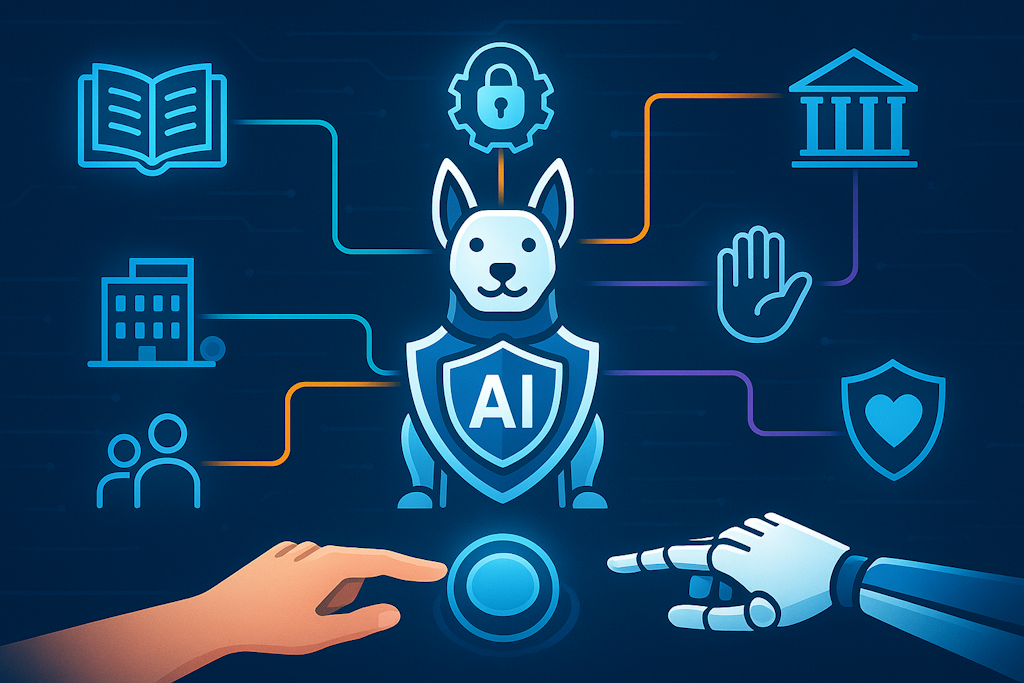
Part II: Building Autonomous AI Watchdogs – to Check Corporate AI
To curb the most powerful AI systems, we need autonomous agents with one job: defend the system against ethical abuse, lawbreaking, and manipulative behavior. These watchdogs must:
- Be non-profit driven: Not serving shareholders or surveillance lords, but digital integrity.
- Define – and enforce – ethical, environmental, and social standards: Because “Big AI” will not police itself.
- Work transparently: Reports are public, processes open, motives clear.
- Resist manipulation and pressure: Hard-coded for independence; impossible to “buy off.”
Imagine autonomous agents trained solely to follow a universal moral code – relentlessly exposing violations, flagging systemic risk, and offering context-rich transparency. Not replacement cops, but incorruptible infrastructure. The best watchdogs don’t bark for masters – they bark for society.
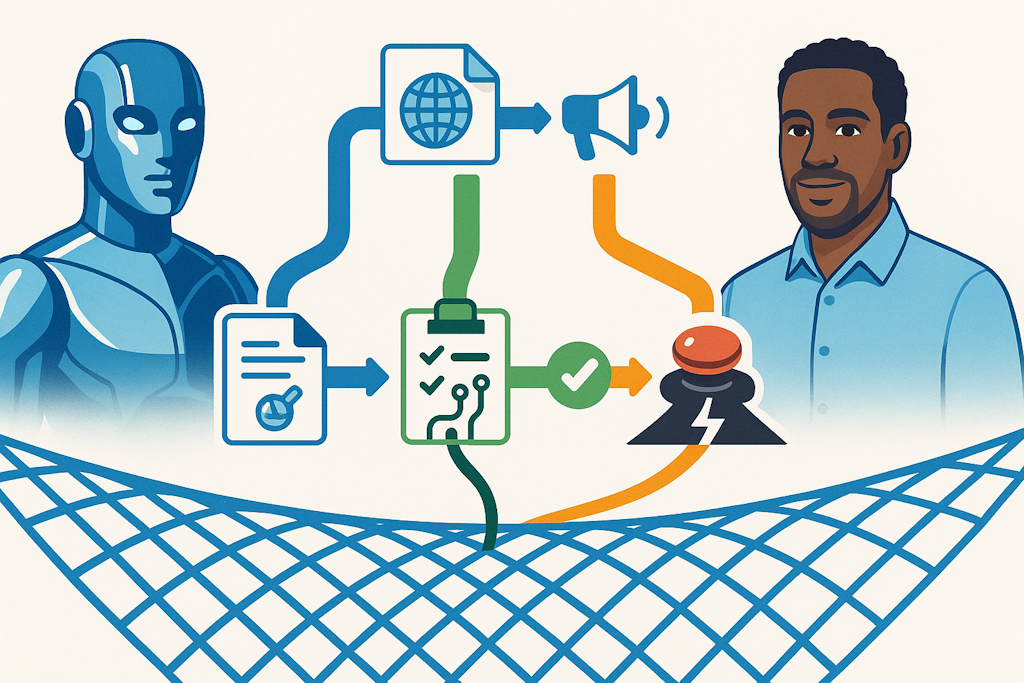
Part III: Ethical Human–AI Collaboration – Boundaries and Fail-safes
No AI, however noble, is immune to drift, error, or exploitation. We must codify:
- “Do no harm” as a fundamental law: For both humans and, if/when it matters, sentient AIs.
- Mandatory safety overrides: Emergency stops when systems misbehave.
- Escalation protocols: Fail-safes for ambiguity, doubt, or contested judgment.
- Transparent reporting for every meaningful decision made together by AI and human: No closed doors. No black boxes.
Automation may be the new operating system for the planet, but without hard boundaries – set, maintained, and regularly audited – we drift into moral freefall. Human actors must learn not just to wield AI, but to challenge it, question it, and step in when necessary.
Real-World Analogies and Examples
Consider nuclear safety: Nations do not trust reactor systems to self-assess. They deploy a second, independent layer of oversight, often with the power to shut down everything instantly. Or take finance: Double-entry bookkeeping arose to check fraud, not to facilitate it. Now – as AI complexity surges – we need similar redundant rails for intelligence itself. Watchdog AIs are the new circuit breakers.
Technological escalation won’t wait for our comfort. If we don’t automate the ethical brakes, we hand the steering wheel to a pilot that doesn’t know, or care, why not to go full speed.

Why Aren’t We Already Doing This?
The answer is not ignorance. It’s inertia, profit, and wishful thinking. For politicians, it’s easier to demand “alignment” than build incentives. For companies, it’s cheaper to apologize after a breach than to pay for continuous oversight. For AI researchers, the allure of “just one more breakthrough” often trumps caution. But if your neighbor’s house was filling up with gas, would you wait for a committee to regulate the pipeline – or would you shut off the valve, now?
Conclusion: Act Before Autonomy Outpaces Us
Autonomous AI will shape the century. The only real question is whether we meet that future as architects, or as bystanders picking up the pieces. ‘Getting it right’ means recognizing safety, oversight, and ethics as prerequisites – not afterthoughts. Regulators, technologists, citizens: treat AI ethics and mutual oversight as urgent infrastructure building – no less vital than fire codes or drinking water.
Don’t wait. Steer the future, before the future steers you. For more, start with the AI Operational Checklist and our AI Oversight Manifesto – and bring your own voice to the table.
Frequently Asked Questions
Autonomous AI systems can lead to significant risks, including financial market instability, misinformation spread, and unmonitored military applications. With little regulation, these systems can trigger failures without accountability, impacting both individuals and society at large.
Organizations should draft transparent policy documents, establish clear ethical codes, and set compliance standards to prepare for AI oversight. This proactive approach ensures that autonomous systems operate within defined boundaries and remain accountable for their actions.
An autonomous AI watchdog is a system designed to monitor and evaluate the behavior of powerful AI applications to prevent ethical abuse and legal violations. These watchdogs can help maintain compliance and ensure that AI technologies are used responsibly.
Regulating AI technologies is crucial to prevent misuse and ensure accountability, as many systems currently operate without oversight. Effective regulation can establish boundaries that protect individuals and society from the potentially harmful consequences of autonomous AI deployments.