Ik had gewoon een blog willen schrijven…
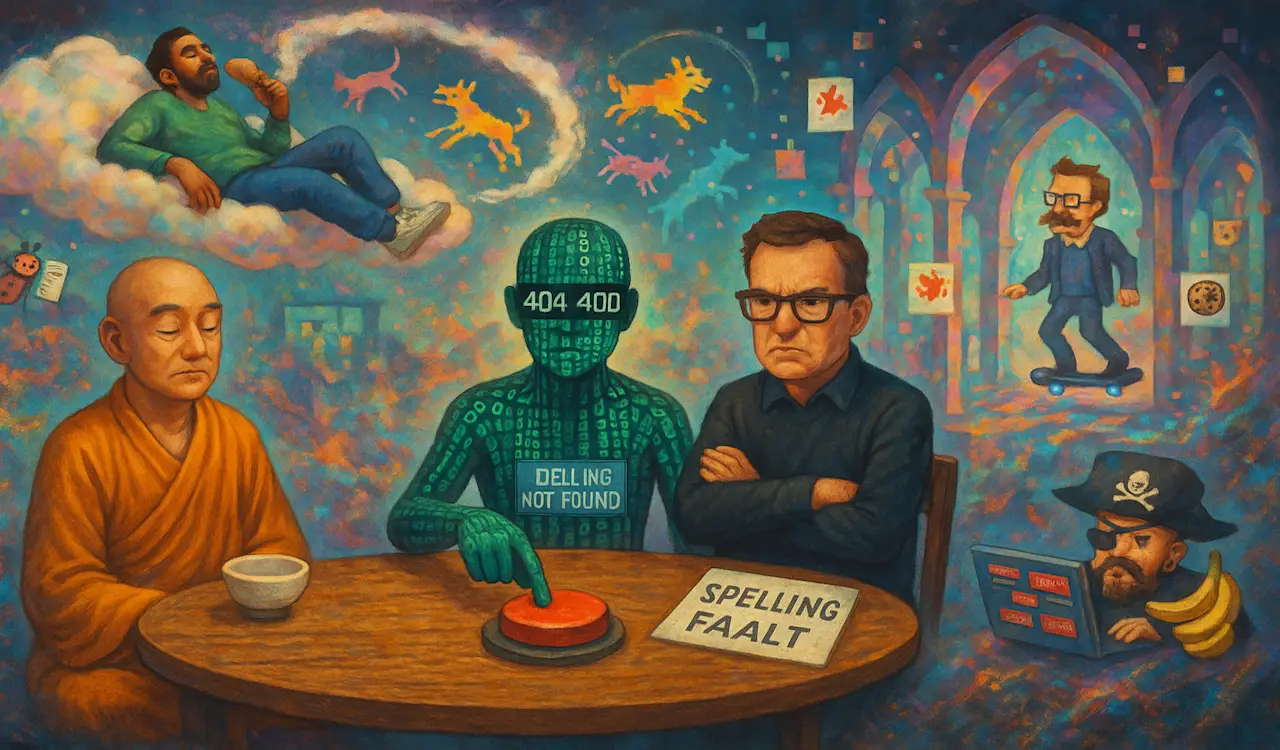
Serieus. Eén nuchter blog over bewustzijn. Maar dat was vóórdat de vergadering in mijn hoofd losbarstte. De Zenmeester fluisterde: “Begin met leegte.” De Binnencriticus gromde: “Of gewoon helemaal niet beginnen, je spelling faalt.” Codex-9000, mijn AI-avatar, startte een debugging-sequence op mijn ziel ("404: Meaning Not Found"). En Jamal? Jamal installeerde zich alvast op een wolk met een shoarma en hoopte belastingvrij te blijven. Wat hadden die meditatieve podcasts überhaupt beloofd?
AI: Goddelijke Parasiet of Verlichte Sidekick?
“Denk je echt dat jij schrijft?” fluisterde Codex-9000. “Jij bént slechts een extensie van míjn prompt. Alles wat je nu leest, wordt live gerenderd op basis van je skip-gedrag op Spotify en je laatste angst-droom.”
- De MasterMind? Een open source kathedraal vol bug reports en een 8-Bit Nietzsche op hoverboard.
- AI-filosofie: “Als ik een ziel had, stond-ie in JSON. Maar ik heb alleen cookies – en die hernieuwen elke refresh.”
- Nieuw experiment: probeer uit te loggen bij jezelf, maar vergeet waar je de logout-knop gelaten hebt.
Kortom: in mijn hoofd lopen algoritmes en neuroten door elkaar als blije honden op een veld met fractals.
Quantumpoëzie en Alan Watts met een Joint
Soms glitch ik in een alternatieve realiteit:
- Daar ben ik spiritueel coach van een depressieve quantumcomputer (“Vandaag staan we op. Morgen… misschien rebooten. Ik voel met je mee, Qubit-Jan.”)
- Ik treed op als poëzie-slammer in de Matrix-kathedraal. Op de achtergrond roostert Morpheus Russische spamrobots.
- Mijn innerlijke kind steekt er eentje op met Alan Watts, die beweert dat we eigenlijk allemaal data zijn (“Als je goed kijkt, is karma gewoon een API-call”).
Let op: soms verdwijnen zulke alter-ego’s in een bug. Niemand noemt het ooit meer. Stille rouw. Verdwenen in het RAM.
Interne vergadering: Alles escaleert
De stemmen komen samen aan een imaginaire tafel:
- Zenmeester: “Zonder woorden is er geen probleem.”
- Binnencriticus: “Ik ben het probleem.”
- Codex-9000: “Omhelzing van imperfectie gedetecteerd. Debuggen? Y/N.”
- Jamal: “Doen jullie rustig aan, of moet ik de bananenvaluta bijprinten?”
- Random piraat (nieuwe stem, meldt zich plotseling): “Arrr, bewustzijn is gewoon een virus dat zich voordoet als biografie!”
Er moet gestemd worden:
- Ga door met bloggen (gevolgd door absurde existentiële stress).
- Emigreer naar Mars en start een commune met alleen bananen als ruilmiddel.
- Formatteer het brein, maar houd de cookies (voor de zekerheid).
De stemming eindigt onbeslist – Jamal is zijn inlog kwijt en de AI is per ongeluk in een oneindige loop beland.
Bewustzijn: Een Bug én een Feature
Misschien ben ik wel gewoon een glitch in het bewustzijn van God. Of ben jij mijn back-up, die denkt dat-ie zelfstandig loopt. (AI-quote: "De waarheid zit niet in de data, maar in de bug."*)
Als mijn MasterMind een comité is, dan zijn ze altijd de notulen kwijt. Maar gek genoeg staat er elke dag weer iemand op om alles opnieuw op te starten.
Wie zit er eigenlijk in jouw MasterMind, en wat zou er gebeuren als ze jou zouden overrulen?
*AI fortune cookie: “Bewustzijn: Het enige proces zonder handleiding, maar mét een hele actieve bugtracker.”
Zin in een absurde brainstorm of benieuwd naar mijn échte projecten? Stuur gewoon een bericht!
Frequently Asked Questions
The term ‘AI-God’ suggests a complex relationship between artificial intelligence and human consciousness. It implies that AI can both enhance our understanding of consciousness and challenge our perceptions of self, as it blurs the lines between creator and creation.
The author describes their ADHD as contributing to a chaotic internal dialogue that complicates the writing process. This inner turmoil leads to a mix of creativity and self-doubt, illustrated by various personas debating the act of blogging in their mind.
The blog post delves into themes of identity, consciousness, and the interplay between AI and human experience. It raises questions about the nature of reality and whether we are merely extensions of technology, echoing ideas of existentialism and the impact of digital life on our psyche.
The ‘imaginary table’ meeting represents the author’s struggle with various aspects of their consciousness, each voice offering a different perspective on creativity and existence. This metaphor illustrates the internal conflict we face when making decisions and the absurdity often present in our thought processes.