Waarom dit belangrijk is
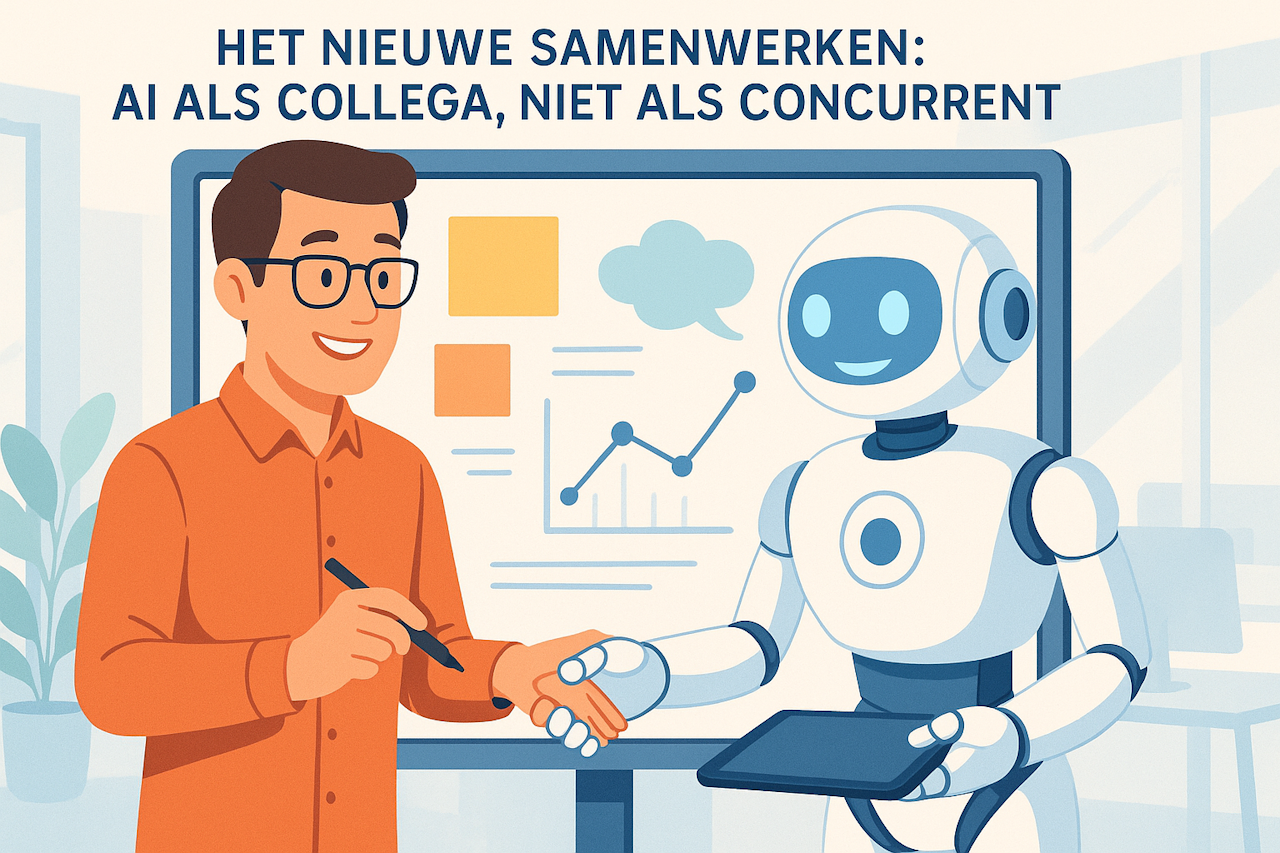
Veel organisaties zien AI nog steeds als een ‘robot’ die banen inneemt. Maar de echte kracht? Samenwerken, niet vervangen. De toekomst is weggelegd voor teams waarin mens en AI elkaar versterken.
Zo verandert AI de dynamiek op de werkvloer
- Handen vrij voor creativiteit: AI kan repeterend werk uit handen nemen, waardoor medewerkers tijd krijgen voor klantcontact en innovatie.
- 24/7 Assistentie: Met slimme chatbots of AI-ondersteunde dashboards is er altijd ‘iemand’ beschikbaar om vragen te beantwoorden of processen te monitoren.
- Beter inzicht, betere besluiten: AI analyseert razendsnel data en helpt teams om sneller en onderbouwd te beslissen – mits de menselijke context niet vergeten wordt.
Praktijkvoorbeeld: teamspirit door AI
Bij een Nederlandse groothandel werd een AI-bot ingezet voor productadvies in de webshop. In het begin was er scepsis: ‘Worden wij nu overbodig?’ Na gezamenlijke workshops werd duidelijk dat de medewerkers onmisbaar waren – voor klantcontact, empathie en het oplossen van complexe vragen. Het resultaat? Meer tevreden klanten en een sterker teamgevoel.
Tips voor een mensgerichte AI-cultuur
- Betrek medewerkers vroeg en vaak bij elke AI-pilot.
- Blijf trainen: leer mensen om goed samen te werken met digitale collega’s.
- Maak van feedback een speerpunt. Vraag niet alleen naar wat werkt, maar ook naar twijfels of zorgen.
- Zorg dat de voordelen voelbaar zijn: geef successen een gezicht, bijvoorbeeld door te laten zien hoeveel tijdwinst of klanttevredenheid er geboekt is.
Let hierop
- AI werkt alleen goed als er vertrouwen is, transparantie over beslissingen is dus essentieel.
- De menselijke maat moet leidend blijven: automatisering is ondersteunend, niet heiligmakend.
Benieuwd hoe jouw team sterker wordt met AI? Start met een pilot of ontdek meer op onze kennisbank!
Frequently Asked Questions
AI can enhance teamwork by taking over repetitive tasks, allowing employees to focus on creativity, customer engagement, and innovation. This collaboration leads to a more dynamic work environment where human skills complement AI capabilities.
AI offers 24/7 assistance through chatbots and AI-supported dashboards, ensuring that customer inquiries are addressed promptly. This not only improves customer satisfaction but also frees up human employees to tackle more complex issues that require empathy and problem-solving.
To foster a human-centric AI culture, organizations should involve employees early in AI pilots, provide continuous training, and prioritize feedback. It’s also crucial to demonstrate the tangible benefits of AI, such as time savings and improved customer satisfaction.
AI aids decision-making by quickly analyzing vast amounts of data, providing insights that help teams make informed choices. However, it’s vital to maintain the human context to ensure decisions are relevant and effective.