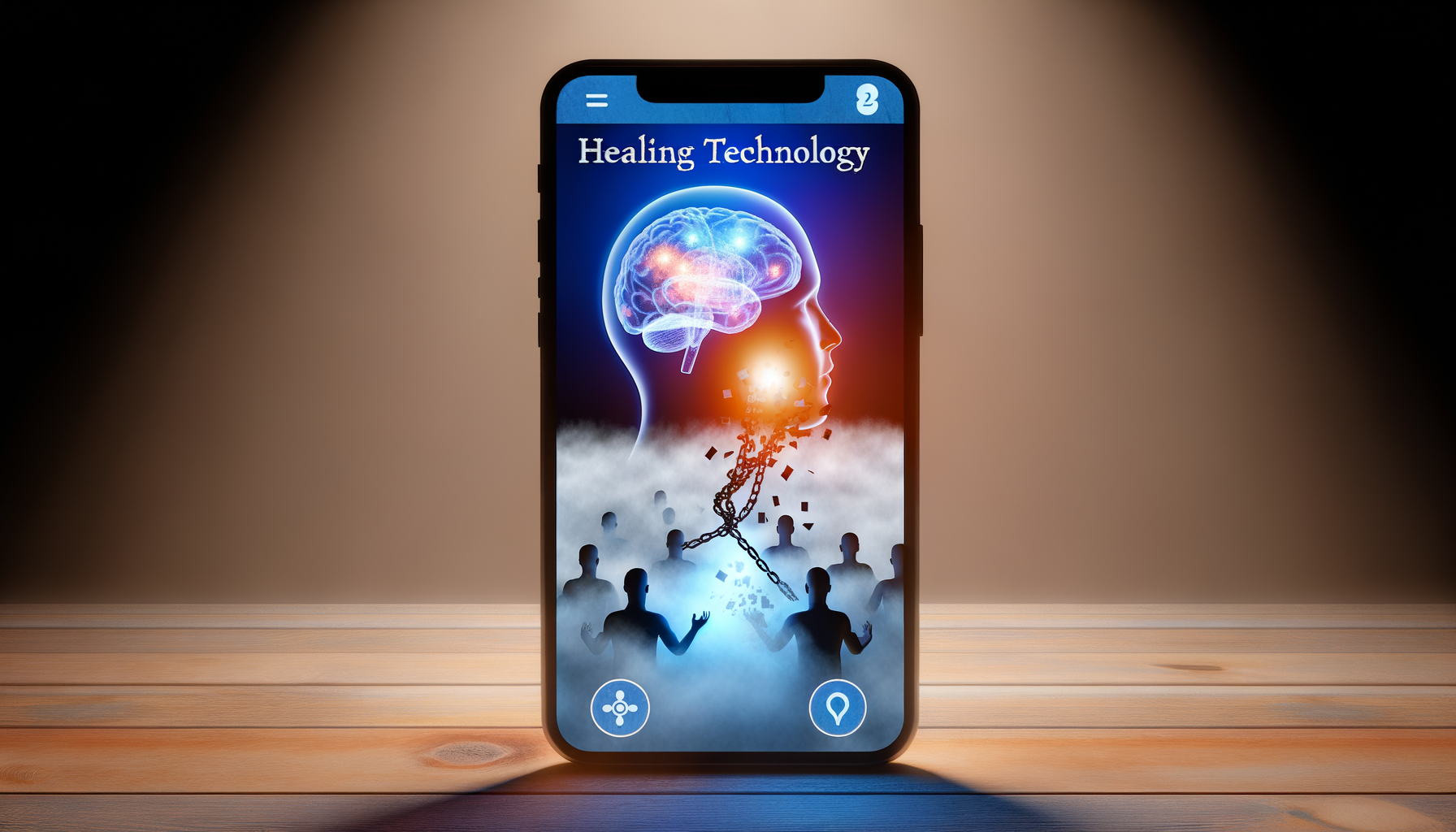
Part 10 of 12: The Narcissism Pandemic Series
What if you had an AI assistant that gently pointed out: “Hey, you’re in a bubble right now. Want to see another perspective?”
What if an app could track when you’re being algorithmically radicalized, and help you resist?
What if you could learn to bridge divides the same way you learned any other skill – with practice, feedback, and tools?
We built it. Let me show you.
The Depolarization App: “Clearview”
The Core Problem
You’re being manipulated by algorithms 24/7. But you can’t SEE it happening. It’s invisible, ambient, constant.
Like a fish in water, you don’t notice the water.
The solution: Make the water visible.
Feature 1: Real-Time Bias Detection
How it works:
App runs in background while you browse social media / news.
Uses AI to analyze:
– Political lean of content (left/center/right)
– Emotional tone (neutral/outrage/fear-based)
– Epistemic quality (sourced/unsourced, nuanced/absolute)
– Engagement bait (clickbait/sensationalism)
Real-time alerts:
“Your feed today: 85% left-leaning, 15% center/right”
“You’ve encountered 0 conservative perspectives this week”
“This headline is engineered for outrage (confidence: 87%)”
“This claim is disputed by fact-checkers”
Suggests:
“Here’s a quality article from another perspective: [link]”
Why this works:
– Awareness is first step
– Non-judgmental (just shows you the data)
– You choose what to do with info
Feature 2: Emotional State Tracker
How it works:
Periodic prompts (every 30-60 min of social media use):
“How are you feeling right now?”
– Calm → Agitated (1-10)
– Happy → Angry (1-10)
– Connected → Isolated (1-10)
– Informed → Confused (1-10)
App learns:
– What content precedes emotional shifts?
– What patterns trigger you?
– When are you most vulnerable?
Interventions:
“Notice you feel angry after reading about [topic]. Want to take a break?”
“Your heart rate increased 15bpm in the last 10 minutes. Algorithmic manipulation detected.”
“You’ve been scrolling for 45 minutes and report feeling worse. Time to stop?”
Why this works:
– Makes emotional manipulation visible
– You notice patterns you couldn’t see before
– Gives you agency to interrupt the cycle
Feature 3: The Steel-Man Generator
How it works:
You encounter argument you disagree with.
Hit “Steel-Man” button.
AI generates the BEST possible version of that argument:
– Most charitable interpretation
– Strongest evidence
– Most sophisticated reasoning
– Steel man, not straw man
Then quizzes you:
“Which of these represents their actual view?”
A) [Your initial interpretation]
B) [Slightly better version]
C) [Steel-manned version]
D) [Even better steel-man]
Trains you to:
– Engage with real arguments
– Get past knee-jerk reactions
– Build empathy through understanding
Why this works:
– Can’t hate what you actually understand
– Forces intellectual honesty
– Gamified (want to get right answer)
Feature 4: Perspective-Taking Exercises
Daily prompts:
“Try to explain why someone might believe [position you disagree with]”
“Imagine you grew up in [different context]. How might you see this issue?”
“What would it take for you to change your mind about [your position]?”
Guided meditations:
5-minute audio: “Imagine the world from their perspective…”
Walk through their lived experience, values, fears, hopes.
Role-play mode:
Chat with AI that argues opposite position.
Try to pass ideological Turing test (could someone from that tribe tell you’re not really one of them?).
Gamification:
– Streak counter (X days of perspective-taking)
– Achievements unlocked
– Leaderboard (among friends, if competitive)
Why this works:
– Builds cognitive flexibility
– Reduces dehumanization
– Makes empathy a practice, not just sentiment
Feature 5: Bridging Social Feed
Alternative to your main feed:
Shows ONLY content that:
– Is liked by both left AND right
– Reduces polarization (measured)
– High epistemic quality
– Bridges tribal divides
Curated for:
– Cross-partisan success stories
– People who changed their minds
– Shared values/concerns
– Humanizing content
Why this works:
– Shows that common ground exists
– Models bridge-building
– Reduces affective polarization
The 8-Week Bridging Skills Curriculum
App is helpful. But deep change requires structured learning.
Week 1: Know Your Own Bias
Content:
– Confirmation bias explained
– Motivated reasoning
– How your brain tricks you
Exercise:
– Track media diet (bubble test)
– Identify sacred values (what can’t be questioned?)
– Self-assessment quiz
Goal: Self-awareness before fixing others
Week 2: Emotional Regulation
Content:
– Amygdala hijack (what happens when you’re triggered)
– Recognizing your triggers
– Cooling-off techniques
Exercise:
– Notice when triggered (body signals)
– Practice: Pause → Breathe → Respond
– Track triggers for week
Goal: Stay rational during charged discussions
Week 3: Steel-Manning
Content:
– Steel man vs straw man
– Ideological Turing Test
– Principle of charity
Exercise:
– Take argument you hate
– State strongest version
– Get other side to verify accuracy
Goal: Engage with real arguments, not caricatures
Week 4: Active Listening
Content:
– Listening to understand (not to rebut)
– Reflective listening
– Non-defensive receiving
Exercise:
– Partner exercise: One speaks, other ONLY listens/reflects
– Switch roles
– Debrief
Goal: Make them feel heard (prerequisite for them hearing you)
Week 5: Finding Common Ground
Content:
– Shared values discovery
– Reframing (from “I’m right” to “we both want X”)
– Superordinate goals
Exercise:
– Cross-partisan pairs
– Find 3 things you agree on
– Build from agreement outward
Goal: Establish foundation before addressing differences
Week 6: Productive Disagreement
Content:
– Factual vs value disagreements
– “I” statements
– Calibrated questions
Exercise:
– Discuss contentious topic using techniques
– Debrief: What worked?
Goal: Disagree without dehumanizing
Week 7: Epistemic Humility
Content:
– Confidence calibration
– Bayesian updating
– Admitting uncertainty
Exercise:
– Identify belief you’re least certain of
– Research best counter-argument
– Present to group
Goal: Reduce overconfidence, increase nuance
Week 8: Integration
Content:
– Putting it all together
– Maintaining practice in hostile environment
– Self-care (bridging is exhausting)
Exercise:
– Final cross-partisan dialogue (all skills)
– Commitment: How will you keep bridging?
Goal: Sustainable practice
Cult Deprogramming (For The Fully Captured)
Some people are too far gone for apps and courses. They need intervention.
The Approach
Stage 1: Crack The Shell
Goal: Introduce cognitive dissonance (gently)
Method:
– Use in-group messengers (can’t dismiss as easily)
– Ask questions (don’t tell): “What would change your mind?” “How do you know that?”
– Highlight internal contradictions
AI chatbot:
– Trained in Socratic questioning
– Infinitely patient
– Available 24/7 when person is ready
Stage 2: Provide Alternative Identity
Goal: Show you can leave tribe and still have meaning/belonging
Method:
– Offer alternative community (ex-partisans)
– Affirm underlying values (you care about justice – so do we, differently)
– Success stories (people who left and are happier)
Why this works:
Can’t ask someone to leave tribe without offering alternative.
Stage 3: Gradual Exposure
Goal: Humanize the other side
Method:
– Shared activities (not debate, just human contact)
– Personal stories (hear their lives)
– Find common ground first
Why this works:
Hard to hate individual humans (easier to hate abstract groups).
Stage 4: Integration & Support
Goal: Rebuild identity post-exit
Method:
– Therapy (process trauma from tribal conflict)
– Support group (“ex-partisans anonymous”)
– Help find purpose beyond tribe
Distribution & Business Model
Who Is This For?
Primary market:
– The exhausted 70% who hate polarization
– People who notice they’re too angry
– Parents worried about kids
– Anyone who thinks “I spend too much time in outrage mode”
Secondary market:
– Therapists (tool for clients)
– Schools (civic education)
– Corporations (workplace polarization is real)
Business Model
Freemium:
– Free tier: Basic bias detection, emotional tracker
– Premium ($5/month): Full features, no ads, priority support
– Enterprise ($50/month): For organizations, bulk licenses
Revenue projections:
– Year 1: 100K users, 10% premium = $500K revenue
– Year 2: 1M users, 15% premium = $9M revenue
– Year 3: 5M users, 20% premium = $60M revenue
Platform Strategy
Phase 1: Browser extension (works on existing platforms)
Phase 2: Standalone app (iOS, Android)
Phase 3: Integration partnerships (platforms adopt features)
Expected Outcomes
Individual level:
– Reduced affective polarization (hate other side less)
– Better emotional regulation (less anger/anxiety)
– Increased epistemic humility (more “I could be wrong”)
– Higher wellbeing (less time in outrage mode)
Network level:
– Users export bridging behaviors to main platforms
– Cultural shift (makes nuance cool)
– Demand signal (people want this)
Why This Can Work
Precedent:
Calm/Headspace (meditation apps):
– Started niche
– Grew to 100M+ users
– Made mindfulness mainstream
– Billion-dollar valuations
We’re doing the same for depolarization.
What You Can Do:
1. Join waiting list (if we build this, be early adopter)
2. Share this post (gauge demand)
3. Practice skills (don’t need app to start)
4. Support development (donate/invest if option exists)
Next in this series: “The Implementation Blueprint: How We Coordinate” – We have tools, regulations, culture shift planned. Now: How do we deploy ALL of it AT ONCE? The 48-month master timeline.
Previous posts: Links to Parts 1-9
Want early access? [Join waiting list]
Don’t want to miss a post? Subscribe
Part 10 of 12 in the Narcissism Pandemic series. Based on insights from behavioral designers, therapists, and app developers.
Frequently Asked Questions
The Clearview app runs in the background while you browse, analyzing the political lean, emotional tone, and engagement style of content. It provides real-time alerts about your feed’s bias, helping you recognize when you’re being exposed to one-sided perspectives.
Clearview includes an Emotional State Tracker that prompts users to assess their feelings during social media use. It learns from your responses to identify patterns in emotional shifts and can suggest breaks when it detects negative feelings linked to algorithmic manipulation.
The Steel-Man Generator allows users to engage with arguments they disagree with by generating the strongest version of that argument. This feature encourages understanding and empathy by prompting users to reflect on and answer quizzes about the revised arguments.
The Clearview app offers daily prompts that encourage users to explain differing viewpoints and engage in perspective-taking exercises. This practice helps build empathy and understanding, fostering healthier conversations across ideological divides.