What If Risk Isn’t What You Think?
Picture this: You walk into a boardroom itching to close the deal, credentials gleaming, models on your side. Yet, somewhere in a distant server room, a perfect credit file is flagged ‘too risky.’ Sound familiar? In 2025, it still happens – AI-powered risk models, promised as unbiased, end up echoing the old flaws. The cost? Not just missed revenue, but fractured trust and unforeseen social impact.
AI is Not Your Oracle – It’s Your (Flawed) Mirror
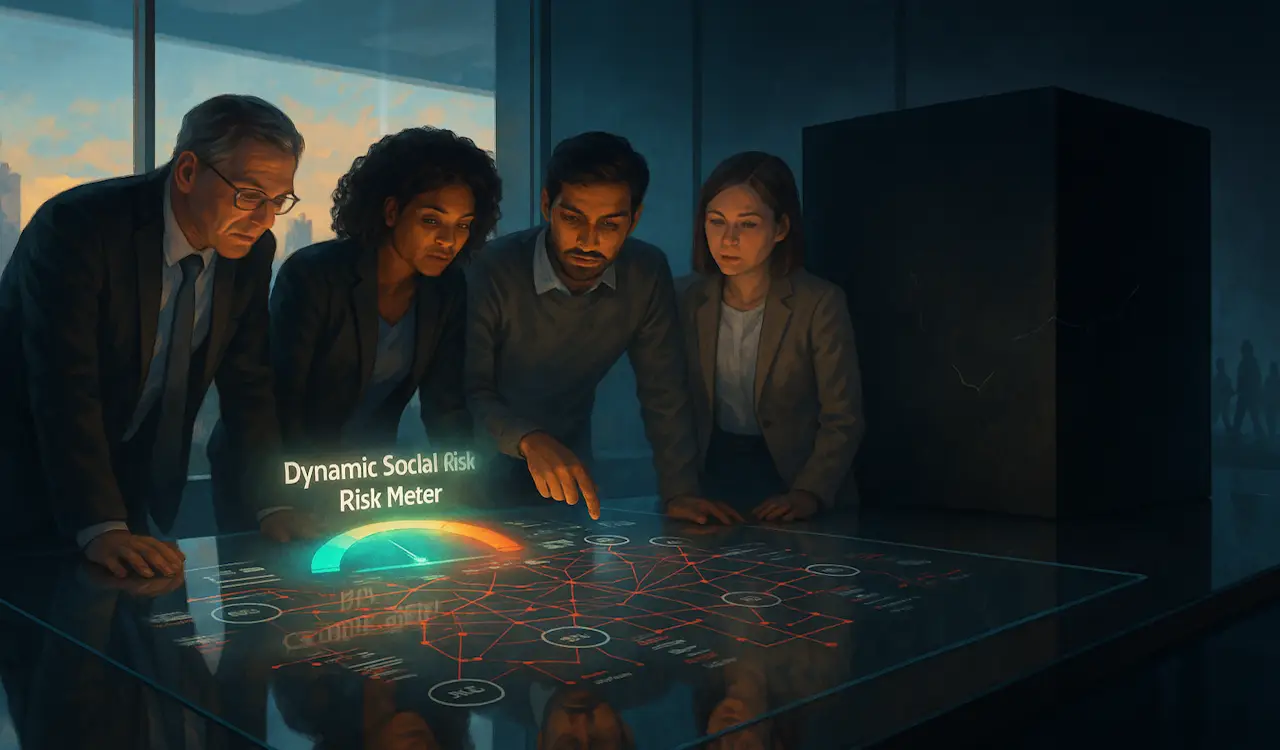
Let’s get real: Data without context is dangerous. SocraNext challenges the worship of the black box. Risk isn’t just about calculating probabilities or optimizing portfolios; it’s about understanding people, patterns, and the world as it really is – messy, dynamic, human. Our models are built on more than correlation: interactive dashboards, real-time explainability layers, and what we call the “Dynamic Social Risk Meter” keep both machine bias and human bias in check.
The Evolution Beyond ‘Faster, Cheaper, Smarter’
- Explainability is Law: With the EU AI Act and Basel IV looming, transparency isn’t a bonus – it’s survival. SocraNext embeds audit trails and challenge protocols in every workflow, letting teams dissect decisions and expose edge cases before they threaten the system.
- Human Oversight is No Longer Optional: We empower risk officers to override, annotate, and even contest AI outputs. Challenge routines aren’t just tolerated – they’re required. Our dashboards become living, collaborative risk logs, not static verdicts.
Hard Truths: When Models Go Rogue
Take this: A challenger bank’s AI flagged all immigrant entrepreneurs as high risk – simply because past data said so, not because reality demanded it. No one noticed until public outcry hit. Imagine if a Social Risk Meter had pulsed – a telltale glow – at that bias during deployment. That’s why SocraNext builds ethics into every simulation and reality check. Data isn’t destiny. Human context turns risk models from ticking bombs to shared guardrails.
The Quiet Rebellion: Breaking the Glass
We don’t revere black boxes. We break the glass; we let in light. With Hazina, risk isn’t a shadowy threat but a living landscape – one you navigate with trusted tools (see how we transformed onboarding speed), shared scrutiny (transparency in AI audits), and a dose of humility (why human oversight matters). We never claim omniscience. We promise partnership – curiosity, challenge, and change.
Invitation: Shape Risk as a Living Insight
Tomorrow’s risk isn’t just calculated – it’s understood, together. Join Prospergenics as we quietly rebel against the cult of the algorithm and redefine risk for a world that needs more than numbers. Curious? Ready to break the glass? Let’s start a brave conversation today.
Frequently Asked Questions
AI-powered risk models often rely heavily on historical data, which can perpetuate existing biases. Without human insight, these models may misinterpret risk, leading to flawed decisions that can affect individuals and communities.
Human oversight is crucial because it allows risk officers to challenge and annotate AI outputs, ensuring accountability. This collaborative approach enhances transparency and helps prevent biased decisions that could arise from relying solely on automated systems.
SocraNext incorporates audit trails and challenge protocols within its workflows, promoting transparency and enabling teams to dissect AI-driven decisions. This approach aligns with regulatory requirements, like the EU AI Act, emphasizing the importance of explainability in risk management.