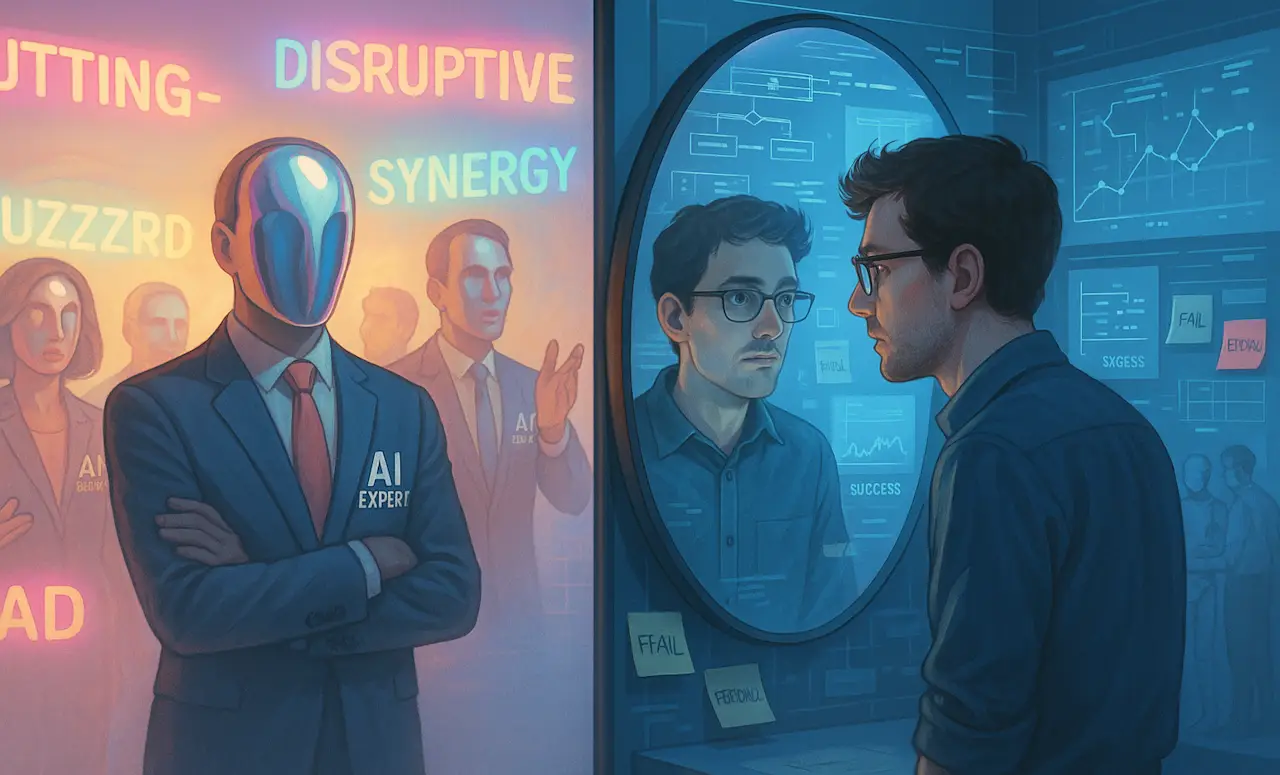
Waarom het label ‘AI-specialist’ zelden iets zegt
Kijk eens rond op LinkedIn of tijdens een netwerkborrel. Iedereen noemt zich tegenwoordig ‘AI-expert’. Maar maakt die titel je automatisch geloofwaardig? Of loop je juist het risico afgepoederde meningen en opgepoetste cv’s te treffen?
De valkuil van zelfverklaarde goeroes
De AI-wereld zit vol met mensen die meer buzzword-bingo spelen dan daadwerkelijk waarde toevoegen. Wie met AI werkt, weet: echte innovatie begint niet met “ik weet alles”, maar met twijfel, experimenteren en falen. De ware specialist is kritisch – en begint bij zelfkritiek.
Hoe herken je de echte van de holle kracht?
- Kritisch denken: Ze spiegelen je niet alleen succesverhalen, maar benoemen óók waar iets niét werkt. Lees bijvoorbeeld onze handleiding over human oversight.
- Echte cases & mislukkingen: Niet elk project wordt een hit – en dat vertellen ze. Ervaringen uit praktijkcases bieden meer waarde dan gladde pitches.
- Blijven leren en delen: Goeroes roepen – specialisten luisteren, testen, en delen hun inzichten zodat anderen mee kunnen groeien. Onze content over onderscheidend bloggen toont: onderscheid maak je door openheid, niet door volume.
Zelfreflectie als drijvende kracht in AI
Wat de beste AI’ers onderscheidt? Hun vermogen om in de spiegel te kijken. Geen tool is perfect, geen mens onfeilbaar. Zelfkritiek is brandstof voor innovatie. Juist door in je eigen projecten een stap terug te doen, voorkom je blinde vlekken en creëer je échte samenwerking – met mensen én technologie.
Praktische handvatten om kritisch te blijven
- Vraag niet alléén naar successen, maar ook naar faalverhalen.
- Gebruik community-projecten als spiegel van impact – niet alles draait om techniek.
- Blijf nieuwsgierig: stel vragen die ongemak oproepen, óók aan jezelf.
Tijd voor scherpte én nuance
AI verandert sneller dan ooit. Juist nu bouwen we niet op plastic titels, maar op nuchtere reflectie, praktische ervaring en radicale eerlijkheid. Zoek partners die kritisch blijven – en zichzelf net zo hard onder de loep nemen als hun technologie.
Klaar om samen het verschil te maken met échte AI-impact? Laten we sparren over wat AI écht voor jou kan doen.
Frequently Asked Questions
A genuine AI specialist demonstrates critical thinking by discussing both successes and failures in their projects. They provide real case studies and learnings rather than just polished pitches, showcasing their ability to reflect on their experiences and share insights.
Self-proclaimed AI experts often engage in buzzword bingo, presenting themselves as all-knowing without acknowledging the complexities of AI. This can lead to inflated resumes and superficial understanding, lacking the depth and critical reflection that true specialists possess.
Self-reflection is crucial for AI professionals as it drives innovation and prevents blind spots in their work. By critically assessing their projects and outcomes, they can foster genuine collaboration and continuous improvement in both technology and processes.
When evaluating an AI consultant, ask about their experiences with unsuccessful projects and what they learned from those failures. This will reveal their ability to critically analyze their work and adapt, which is a key trait of a true AI specialist.