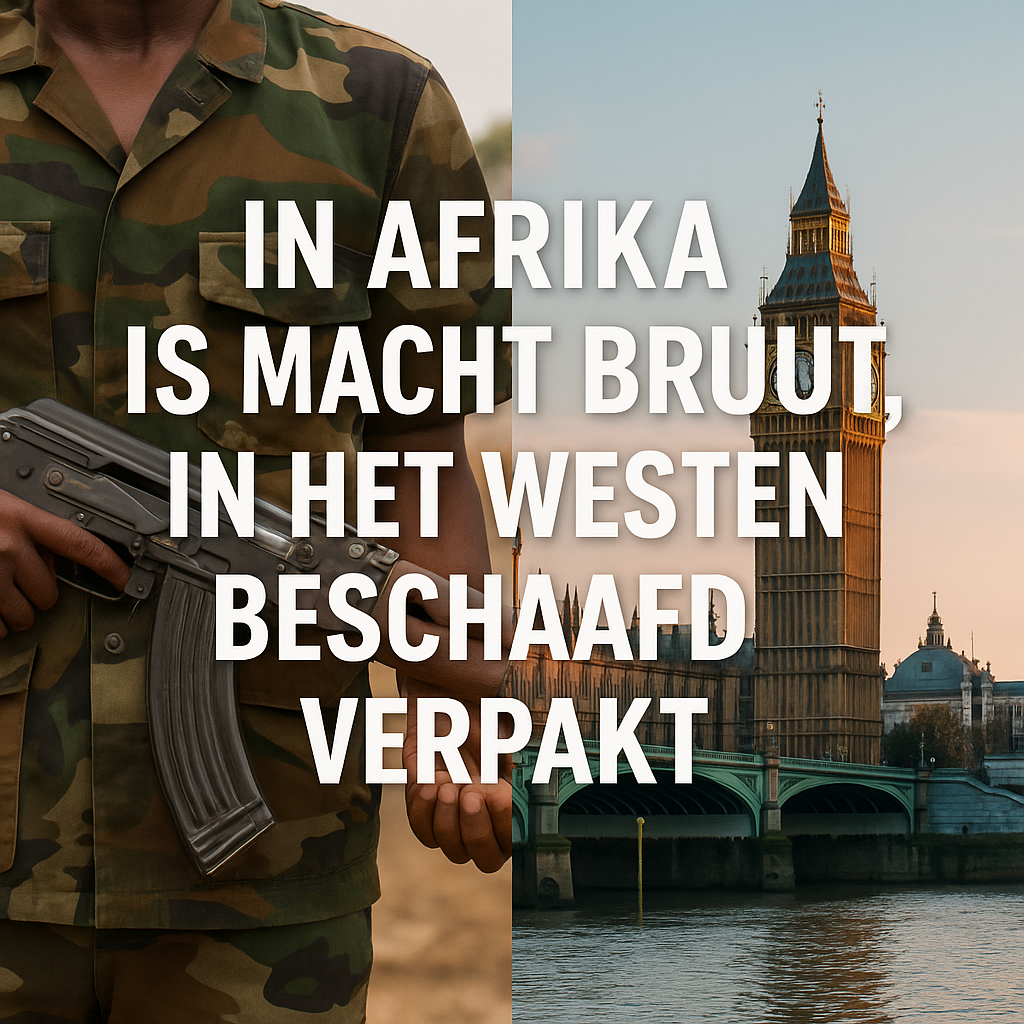
We hebben in Nederland – en breder in het Westen – jarenlang gedacht dat corruptie, machtsmisbruik en politieke manipulatie vooral problemen zijn van verre landen. Van Afrika. Van Zuid-Amerika. Van autoritaire regimes.
“Hier werkt alles volgens de regels.”
“Wij hebben de rechtsstaat.”
“Bij ons kan dit niet gebeuren.”
Maar is dat echt zo?
De realiteit is minder comfortabel.
Het Westen is niet minder corrupt – het is alleen slimmer georganiseerd
Corruptie komt in twee vormen voor:
1. De zichtbare, ruwe variant
Die zie je in delen van Afrika:
steekpenningen, openlijke intimidatie, politieke gevangenschap, clanstructuren.
Het is hard, direct en herkenbaar.
2. De onzichtbare, gejuridiseerde variant
Die zie je in het Westen:
besluiten in achterkamertjes, bureaucratische afdekking, “professionele” framing, politiek tuchtrecht, procesmisbruik en PR-matrixen die alles gladstrijken.
Het is subtiel, gecodeerd en verpakt als “rechtsstaat”.
Niet slechter.
Niet beter.
Gewoon anders.
Waarom Westerlingen zo naïef zijn
We zijn niet dom.
We zijn verwend met zeventig jaar vrede, rijkdom en stabiliteit.
En dat creëert drie psychologische effecten:
1. Basisvertrouwen in het systeem
Wie nooit oorlog, staatsgeweld of honger heeft gezien,
kan zich machtsmisbruik simpelweg niet voorstellen.
2. Geloven in het verhaal van de ‘rechtsstaat’
We denken dat wetten neutraliteit garanderen.
Maar wetten zijn gemaakt én toegepast door mensen.
En mensen beschermen hun eigen structuren.
3. Comfort = cognitieve luiheid
Rijkdom maakt ons conflictvermijdend.
We geloven liever dat alles “toch wel goed geregeld is”.
Afrikanen zijn minder naïef, niet slimmer
Niet omdat ze moreel superieur zijn,
maar omdat ze machtsmisbruik met hun eigen ogen hebben gezien.
Ze herkennen wanneer een systeem zichzelf verdedigt.
Ze vertrouwen liever mensen dan instituten.
En ze analyseren gedrag, niet PR.
Westerlingen herkennen corruptie niet omdat het verpakt is in beleidsnota’s, evaluaties, procedures, commissies en persconferenties.
Het voelt legitiem, zelfs wanneer het niet legitiem is.
De kern: procedure is geen moraliteit
In het Westen verwarren we:
- ‘het proces volgen’
met - ‘het goede doen’
Dat is gevaarlijk.
Macht beschermt zichzelf – altijd.
En ze doet dat niet met geweld, maar met framing, juridische stappen, tuchtrecht, mediacontrole en procesmanipulatie.
De repressie is niet verdwenen.
Ze is alleen professioneler geworden.
Waarom dit nu zichtbaar wordt
We zitten in een tijd van:
- polarisatie
- afkalvende instituties
- inflatie van vertrouwen
- zichtbare hypocrisie
- sociale media die doordringen tot achter de façade
De waarheid kan niet meer volledig worden gecontroleerd.
Burgers beginnen scheuren te zien in het decor van “neutraliteit”.
De echte vraag is niet: ‘Is het Westen corrupt?’
De vraag is:
Herkennen wij de subtiele vormen van machtsmisbruik?
Of geloven wij liever dat het ons niet aangaat?
Vrijheid is geen gegeven.
Vrijheid is een vaardigheid:
de vaardigheid om macht te herkennen, ook wanneer ze glimlacht en in pak gekleed gaat.
De oplossing is niet een nieuw systeem.
De oplossing is persoonlijke integriteit:
- verantwoordelijkheid nemen
- eerlijkheid boven comfort
- kritisch denken
- niet verschuilen achter regels
- je eigen morele kompas volgen
- spreken wanneer het moeilijk is
- weigeren om mee te doen aan framing en manipulatie
Een rechtvaardige samenleving ontstaat niet uit wetten, maar uit mensen die weigeren zichzelf te verliezen.
Daar begint echte vrijheid.
Frequently Asked Questions
The blog post identifies two forms of corruption: visible corruption, which includes overt bribery and intimidation found in certain regions like Africa, and invisible corruption, which manifests as bureaucratic manipulation and political framing in the West.
Western societies tend to overlook corruption due to a basic trust in their systems, a belief in the neutrality of laws, and a comfort that leads to cognitive laziness. Many have not personally experienced severe forms of oppression, making it difficult to recognize subtle abuses of power.
The blog emphasizes that in the West, there is often a confusion between following established procedures and actual moral rightness. This can be dangerous, as power structures may protect themselves under the guise of legality, even when their actions are ethically questionable.
Factors such as polarization, declining institutional trust, inflation of trust, visible hypocrisy, and the pervasive influence of social media are making it easier for citizens to see through the facade of neutrality in governance, leading to increased awareness of subtle forms of power abuse.