The question I get asked most about AI in a business is some version of: “How much can it do on its own?” People want a number. Ninety percent? Fully autonomous by next year? I have come to believe that is the wrong question, and that chasing the answer to it quietly makes systems worse.
The better question is not how much can the AI do alone, but where does a human decision actually belong. Once you ask it that way, the whole design changes.
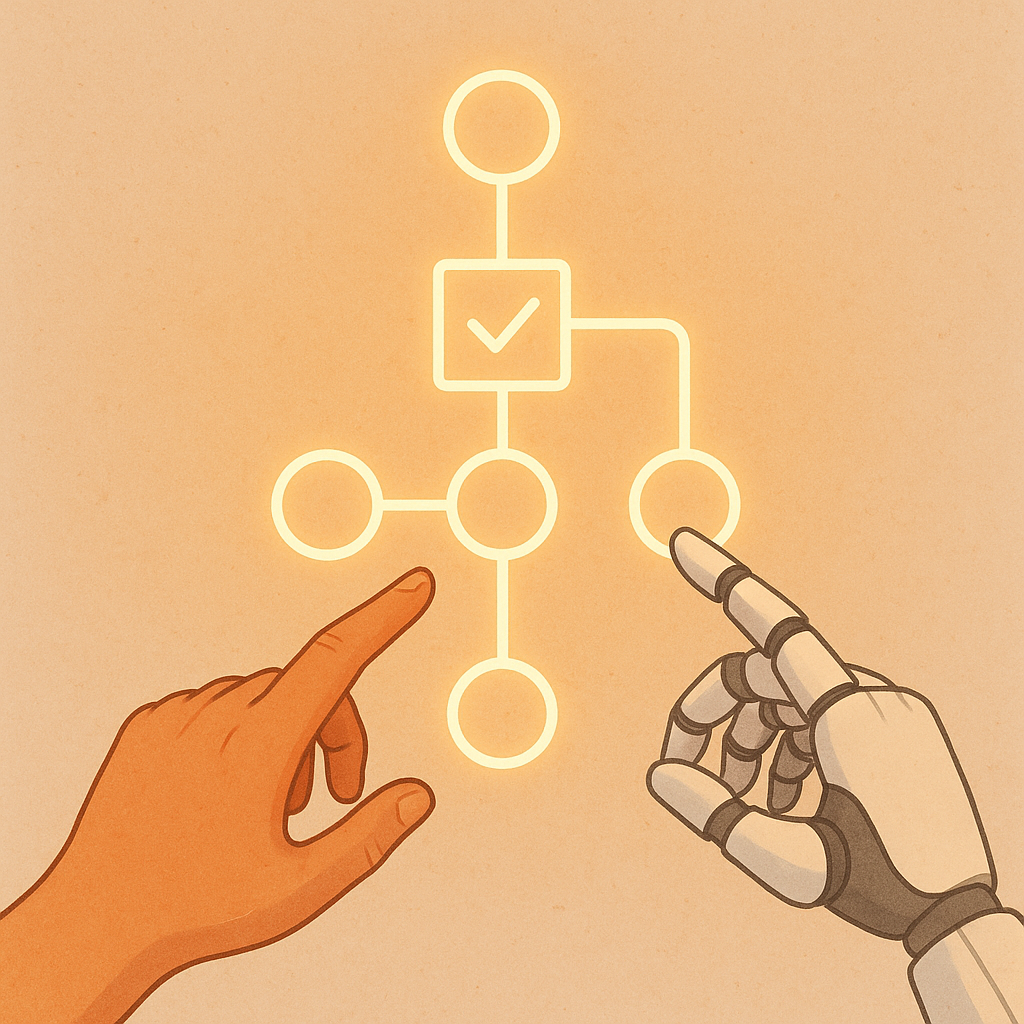
Autonomy is a trap
Full autonomy sounds like the goal because it sounds like leverage. In practice it removes the one thing that made the work trustworthy: someone who is answerable for it. An AI that ships without review is fast right up until the moment it is confidently wrong, and then it is fast in the wrong direction with nobody watching.
I do not want a system that replaces my judgment. I want a system that removes everything around my judgment, so the only thing left for me to do is the part that actually needs a person.
What a good workflow actually looks like
A workflow is just work broken into steps, with a checkpoint wherever a decision carries weight. The AI does the preparation. The human holds the gate. Concretely, in the systems I run:
- The AI reads the request, gathers the context, and drafts the work.
- It does every reversible step on its own: research, first drafts, refactors, test runs.
- It stops at every step that is hard to undo or faces the outside world, and asks for approval.
- A person reviews, corrects, and approves. Then it continues.
The result is not slower. It is faster, because I am no longer doing the ninety percent that is preparation. I am only doing the ten percent that is a decision.
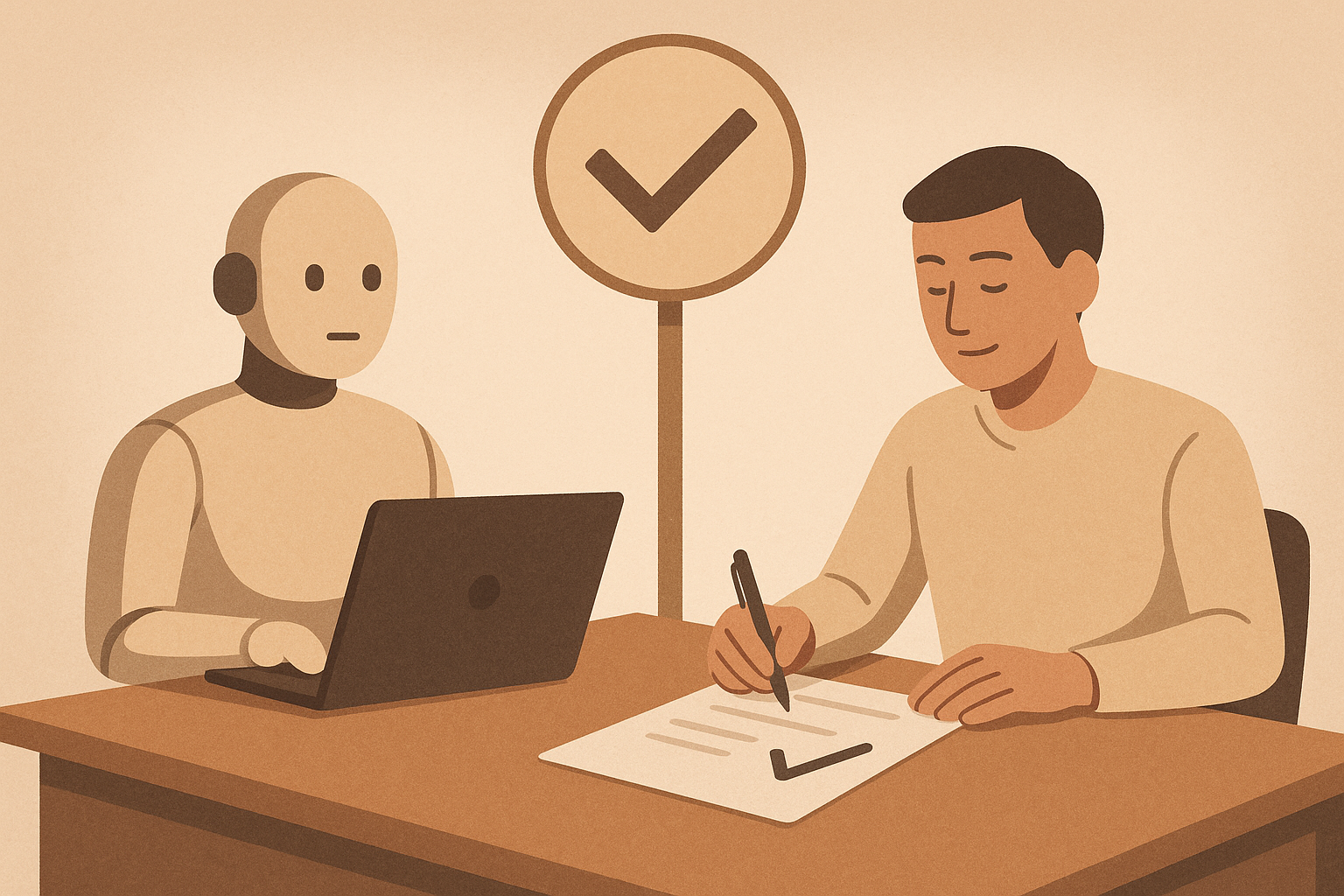
Reversible versus irreversible
The line I draw is simple, and it is the most useful rule I know for working with AI: let the machine do anything that is reversible, and keep a human on anything that is not.
Running tests, writing a draft, proposing a change: reversible. Do them automatically. Sending an email to a client, publishing to a live site, moving money, deleting data: not reversible. Those get a gate. The AI can prepare the whole thing and hand it to me ready to go, but the moment of commitment stays human.
This is how I run my own systems
My agents refine tasks, write code, and open pull requests all day. They never merge to production on their own. They never publish without a person confirming it. The loop is not there because the AI is weak. It is there because accountability cannot be automated. A workflow with gates gives me the speed of automation and the answerability of a human team at the same time.
That is the trade people miss. Human-in-the-loop is not the brake on the system. It is the steering. Take the human out and you do not get a better system, you get a faster one with no one holding the wheel.
So when someone asks me how autonomous my AI is, I tell them the honest answer: as autonomous as the reversible work allows, and not one step past the point where a person should decide. That is not a compromise. That is the design.
Terug naar overzicht